You’ve driven two hours to reach a beautiful campsite, pitched your tent on what looked like perfectly flat grass, and woken up at 3am lying in a puddle with the wind trying to rip your flysheet off. Sound familiar? Picking the wrong spot can turn an otherwise brilliant weekend into a soggy, sleepless disaster. The good news: learning to choose a camping spot comes down to reading three things — the ground beneath you, the wind around you, and the water near you.
This choose camping spot terrain guide covers everything you need to assess before you hammer in that first peg. Whether you’re at an organised campsite with numbered pitches or wild camping on Dartmoor, these principles will save you from the mistakes most of us make at least once. Ask me how I know.
Reading the Terrain Before You Pitch
Terrain is the foundation of a good night’s sleep — quite literally. Get this wrong and no sleeping mat, however expensive, will save you.
Flat Ground Is Non-Negotiable
Your first job is finding genuinely level ground. Not “close enough” level — actually flat. Even a slight slope means you’ll spend the night sliding towards one end of your tent, waking up in a crumpled heap against the sidewall.
Here’s the test: stand where you want to pitch, close your eyes, and feel which way your body wants to lean. If you notice anything, keep looking. You can also place a water bottle on its side — if it rolls, so will you.
A few degrees of slope might seem trivial when you’re standing up. Lying down for eight hours, it’s maddening.
What’s Under the Grass?
Surface matters more than most people realise. You’re looking for:
- Short grass or soft earth — the ideal. Pegs go in easily, the ground has some give, and it drains reasonably well
- Sandy ground — comfortable to sleep on but pegs pull out easily in wind. Bring longer pegs or sand anchors if you’re heading to coastal sites
- Rocky or stony ground — you’ll feel every stone through your sleeping mat, and getting pegs in becomes a wrestling match. If you can’t avoid it, a footprint groundsheet and a thicker mat are essential
- Boggy or waterlogged ground — avoid completely. If the ground squelches when you step on it, that moisture will wick through your groundsheet overnight
Before pitching, clear the area of stones, sticks, pine cones, and anything lumpy. Five minutes of prep saves hours of fidgeting. If you’re choosing your first tent, spend time learning what footprint size you need — it determines how much ground you need to prepare.
Slopes, Ridges and Hollows
Campsites rarely mention the micro-terrain of individual pitches, so you need to assess it yourself. The three formations to watch for:
- Ridges and high points — more exposed to wind but drain brilliantly. Good in settled weather, risky when it blows up
- Hollows and dips — sheltered from wind but collect water like a bathtub. That innocent-looking depression becomes a pond in heavy rain
- Mid-slope positions — the Goldilocks zone for most conditions. Sheltered enough to avoid the worst gusts, high enough that water drains away from you rather than pooling
If you completely must camp on a slope, pitch with your head uphill. Sleeping with blood rushing to your head is far worse than your sleeping bag slowly migrating towards the tent door.
Understanding Wind and Finding Shelter
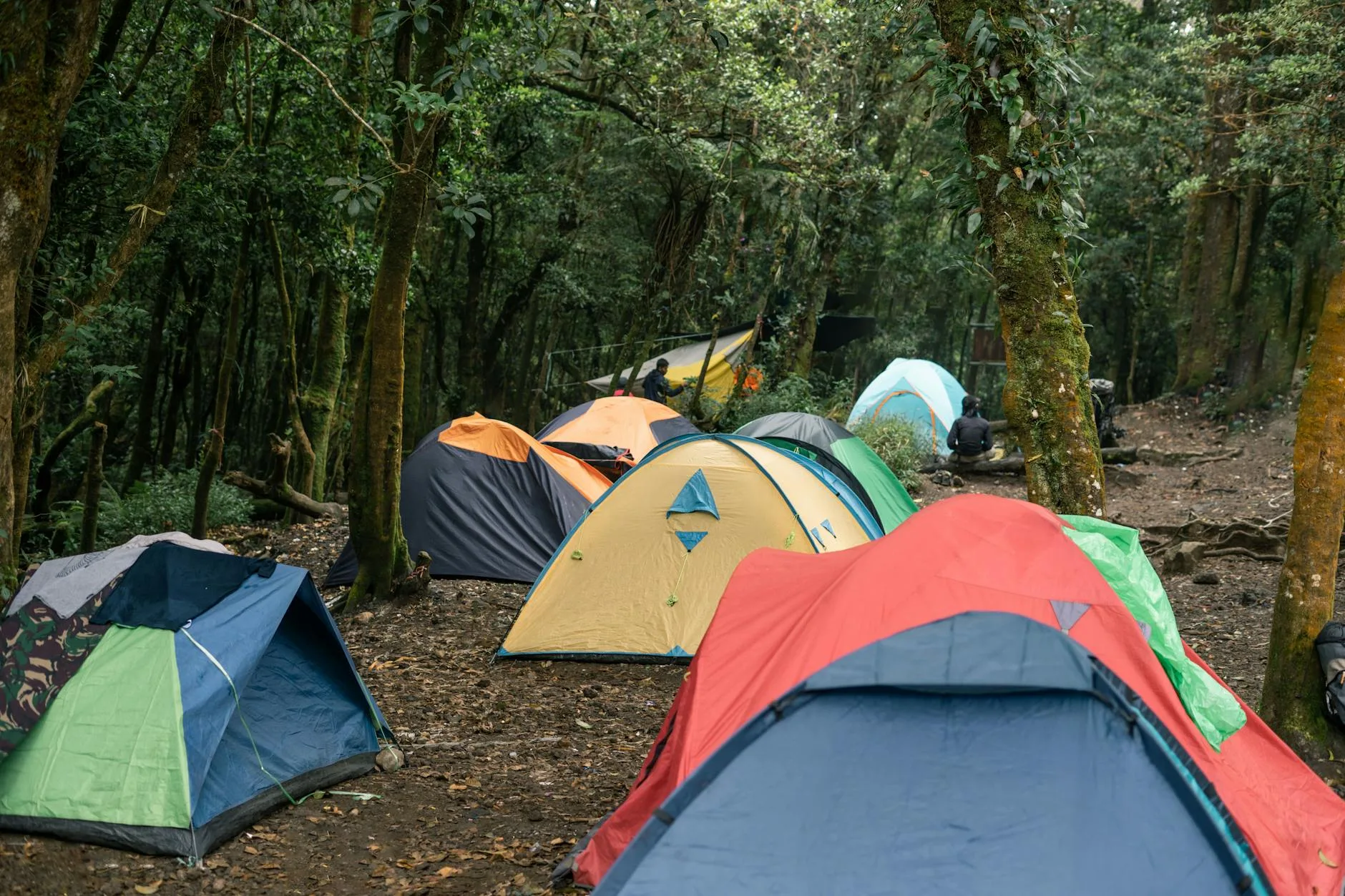
Wind is the one condition that catches people out most often in the UK. A calm afternoon can become a howling night, and your pitch location determines whether you ride it out comfortably or spend the night holding your tent poles together.
Why Wind Direction Matters
Check the forecast before you leave — not just for rain, but wind speed and direction. The Met Office app gives hourly wind data, and Mountain Weather Information Service (MWIS) is excellent for highland areas.
Once you know which direction the wind is coming from, orient your tent so the narrowest end (usually the back) faces into it. Most tents are designed to be most aerodynamic from this angle. Pitching side-on is asking for trouble — the wind catches the broad face like a sail and puts massive stress on your guy ropes and poles.
Natural Windbreaks
The best wind protection is whatever’s already there. Look for:
- Stone walls and hedgerows — common across the UK countryside and brilliant windbreaks. Pitch on the leeward side (the side sheltered from the wind), leaving a gap of at least 2-3 metres so you’re not right against the wall where turbulence eddies can actually be worse
- Tree lines and woodland edges — excellent shelter, but check above for dead branches (widow makers, as outdoor folk call them). A branch falling on your tent at 2am is more than an inconvenience
- Natural terrain features — a slight rise, a banking, even a large boulder can deflect wind in practice
- Other tents and campervans — on busy campsites, being downwind of larger setups provides surprisingly good shelter. Not the most scenic option, but practical
What you want to avoid is creating a wind tunnel. Pitching between two buildings, in a narrow gap between hedges, or in a valley corridor can actually accelerate the wind past your tent rather than blocking it.
Guy Ropes — Your Insurance Policy
Even in a sheltered spot, always use all your guy ropes. Every single one. Most people leave them stuffed in the bag because it’s extra faff, but they’re the difference between a tent that stands firm and one that collapses at midnight.
If you’re camping in exposed conditions — coastal sites, highland pitches, or anywhere above 300 metres — consider upgrading to a tent rated for UK conditions. Budget tents from Argos or Amazon handle calm weekends fine, but their poles and fabrics aren’t built for serious wind. Expect to pay £200-400 for a tent that handles British weather properly.
Water: Friend, Foe, and Everything Between
Water is simultaneously essential for camping and the number one thing that ruins trips. You need it for drinking, cooking, and washing — but you also need to keep it out of your tent, your gear, and your sleeping bag.
Camping Near Water Sources
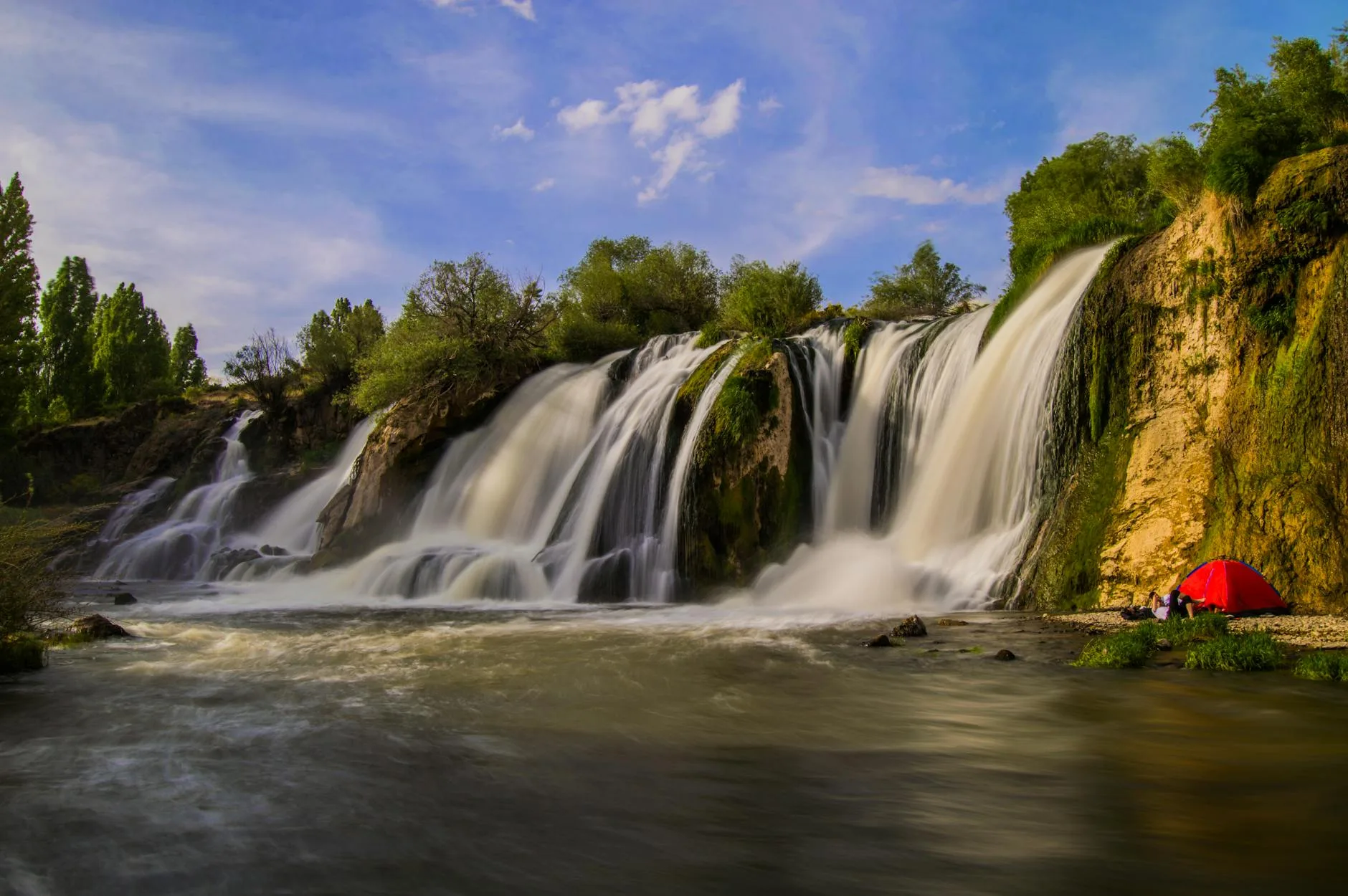
Being near fresh water is convenient, especially when wild camping in the UK where there are no taps. Streams, rivers, and lakes all provide water for cooking (with proper treatment) and a pleasant backdrop. But “near” needs to mean “nearby,” not “next to.”
The rules for camping near water:
- Stay at least 30 metres from any water source — this is both environmental good practice and practical. Rivers and streams can rise noticeably after rain, even rain that fell miles upstream hours earlier
- Never pitch in a dry riverbed or flood plain — if the ground is sandy and flat near a river, there’s probably a reason. Flash flooding kills campers every year across Europe
- Check for high water marks — debris lines on banks, discolouration on rocks, and flattened vegetation all show you where water has reached recently. Pitch well above that line
- Coastal camping — check tide times. That perfect flat spot above the beach might be underwater at high tide. The UK Hydrographic Office tide tables are free to check online
Dealing With Rain and Drainage
In the UK, rain is not a possibility — it’s an eventuality. Your pitch needs to handle it.
The golden rule: water flows downhill. Look at the ground around your proposed pitch and trace where rain would go. If the answer is “directly under my tent,” move. Even a slight natural gradient away from your pitch makes a huge difference.
Practical drainage tips:
- Pitch on a very gentle slope — just enough that water flows past you, not so much that you slide in your sleep. A gradient you can barely perceive by eye is usually perfect
- Avoid the bottom of hills and valleys — all the water from higher ground ends up here
- Check the soil — clay-heavy soil (common across southern England) drains poorly and puddles quickly. Sandy or loamy soil is much better
- Use a groundsheet or footprint — this is your last line of defence. A decent groundsheet costs £15-30 from Decathlon or Go Outdoors and is worth every penny
If rain starts during your trip and you’re already pitched, dig a small trench (5cm deep) around the uphill side of your tent to divert water flow. Not all campsites allow this, so check first — and always fill it back in when you leave.
Water for Drinking and Cooking
If you’re relying on natural water sources rather than campsite taps, treatment is essential. Even clear-looking mountain streams can contain parasites like Giardia and Cryptosporidium.
Your options:
- Water filter — the Sawyer Squeeze (about £30) or LifeStraw (about £20-25 from Amazon UK) filter out bacteria and protozoa. Fast and easy. These are the go-to for most UK wild campers
- Purification tablets — cheap (£5-8 for a pack) and lightweight. Chlorine dioxide tablets kill everything but take 30 minutes to work and leave a slight taste
- Boiling — kills all pathogens but uses fuel and time. Fine as a backup, impractical as your main method if you’re cooking with your camping stove gear
Collect water from flowing sources rather than standing pools. The faster the flow, the less chance of contamination. And always collect upstream from where people or animals might have access.
Putting It All Together: The 5-Minute Site Assessment
You’ve arrived, you’re excited to pitch, and the light is fading. Here’s the quick checklist that covers terrain, wind, and water in one pass:
Step 1 — Stand and scan. Look at the whole area before committing. Where’s the high ground? Where would water collect? Which direction is the wind coming from?
Step 2 — Walk the ground. Feel for slope, softness, and hidden lumps. Check for ant hills, animal burrows, and anything that’ll make the night uncomfortable.
Step 3 — Look up. Dead branches above? Power lines? Anything that could fall or cause problems?
Step 4 — Check for water. How far is the nearest water source? Are you above the high water mark? Where will rain drain to?
Step 5 — Orient your tent. Narrow end into the wind, door away from the prevailing weather, guy ropes tensioned on all points.
This entire process takes five minutes once you’ve done it a few times. It becomes second nature after three or four trips — you’ll walk onto a pitch and immediately know whether it’s a good one.
Common Mistakes (and How to Avoid Them)
Even experienced campers get caught out. Here are the ones that come up repeatedly:
- Pitching under a lone tree — yes, it provides shelter. It also attracts lightning in a storm. Multiple trees are fine; a single tree in an open field is a lightning rod
- Choosing the prettiest spot over the practical one — that Instagram-worthy lakeside pitch with the mountain backdrop is often the most exposed, wettest, and windiest option available
- Ignoring the forecast — checking the weather on Friday for a Saturday trip isn’t enough. Check again Saturday morning. Conditions change fast in the UK, especially in hilly areas
- Arriving late and rushing — the worst pitching decisions happen in failing light when you’re tired and hungry. Aim to arrive with at least an hour of daylight for setup
- Forgetting about morning sun — if your tent faces east, you’ll get early sun warming it (and waking you). West-facing stays cooler in the morning. Neither is wrong, but it’s worth thinking about
What About Organised UK Campsites?
If you’re choosing a campsite in the UK rather than wild camping, you still need to think about terrain, wind, and water — you just have less freedom to choose your exact spot.
Some practical tips for organised sites:
- Ask the warden — they know which pitches flood, which ones get battered by wind, and which ones are the flattest. Most are happy to advise if you ask
- Arrive early for the best pitches — popular sites in the Lake District, Snowdonia, and the Highlands fill up fast in summer. The best terrain goes to whoever arrives first
- Check reviews on campsite booking sites — other campers often mention specific pitch numbers to avoid (usually the boggy or sloped ones)
- Bring appropriate gear — a quality layering system handles temperature swings between sheltered valley pitches and exposed hilltop spots
The Bottom Line
Choosing a good camping spot isn’t complicated, but it does require five minutes of deliberate thought rather than just dumping your gear on the first flat-ish patch you see. Read the terrain for drainage and comfort, check the wind for shelter and tent orientation, and respect water — keep it close enough to be useful but far enough away to be safe.
The best campers aren’t the ones with the most expensive gear. They’re the ones who spend those extra few minutes choosing the right spot. Once you’ve done the 5-minute assessment a handful of times, it becomes automatic — and your camping trips get noticeably better as a result.
Frequently Asked Questions
What is the best terrain for pitching a tent? Short grass or soft earth on level ground is ideal. Avoid rocky, boggy, or waterlogged ground. The surface should be firm enough to hold tent pegs but soft enough to be comfortable — and always clear stones and debris before laying your groundsheet.
How far should you camp from water? At least 30 metres from any river, stream, or lake. This protects against sudden water level rises and is better for the environment. For coastal camping, always check tide times before pitching.
Which direction should a tent face in wind? Point the narrowest end (usually the back) into the prevailing wind. This reduces the wind’s ability to catch your tent and puts less stress on poles and guy ropes.
What should I check first with How to Choose a Camping Spot: Terrain, Wind & Water? Start with the real use case, then check size, compatibility, running costs and maintenance. A product that looks good on paper can still be the wrong fit if it does not suit the room, routine or budget.
How do I avoid wasting money on How to Choose a Camping Spot: Terrain, Wind & Water? Avoid buying on one headline feature alone. Compare the practical details, read the warranty or returns terms, and choose the option that solves your main problem rather than the one with the longest specification list.